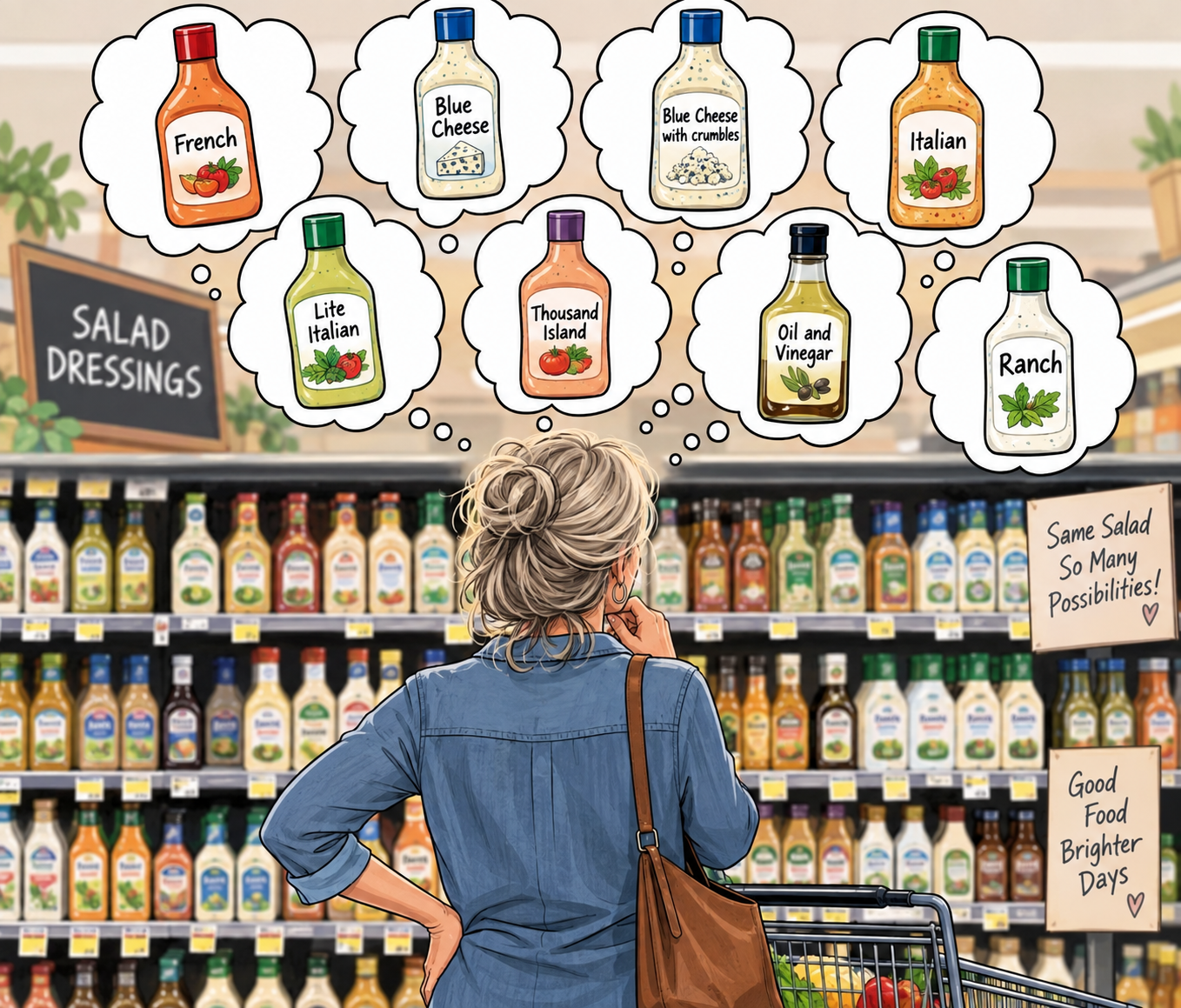
Decision Fatigue
I walked into the healer’s room. It was small, not much bigger than two closets sewn together. In the middle of the room was a massage table draped in sheets and blankets and surrounding the table were hundreds of crystals. “Lay down”, she instructs me. Then she feels my pulse. “You are running on fumes she says,” and she’s right.
2026 has been an intense year. If there is one word I could use to describe it, it would be “boxes.”
She asks me what has been going on in my life. I tell her about packing up my home. “Each item in the 2,300 square foot home was looked at. I had to decide do I leave it in this home for a renter to use/enjoy, pack it up to move with me, give it to a family member or friend, sell it, or donate it.” “Say, no more,” she says, “you are suffering from decision fatigue.”
I burst into tears. She knew what I was going through. She went on to say that most older people will never move from their homes because the idea of cleaning out is too daunting. The task of going through a lifetime of accumulation is difficult, and for some people, impossible. My mind is still back at decision fatigue. She was spot on. The easiest decisions like what to have for dinner or what book to read or show to watch resulted in a paralyzed state. I couldn’t make one more decision. It was just too much.
I laid on her table and for 90 minutes my energy was fluffed, cleaned, uplifted, and tended to. No decisions to be made.
There was a TED talk I listened to decades ago by psychologist Barry Schwartz (2005) on decision fatigue. I decide to listen to it again. He sets up the premise that in the United States there is a belief that more choices equals more freedom. In his grocery store, he says, in 2005 there were 175 salad dressings. Schwartz says there are two downsides to so many choices. The first is paralysis. When there are so many decisions to make we just can’t or won’t — we put it off. Also, with so many decisions we have less satisfaction. After a decision is made we wonder if a different option would have been better. Using salad dressing as our example, while eating your salad you wonder if a different dressing would have been a better choice. From a spiritual perspective, this takes us away from the present moment and from the practice of being grateful. He surmises, and references a research study, that too many choices does not provide freedom but actually hurts us as human beings.
Aware of this, I take a couple of actions. I set aside one day a week to turn off all devices and increase my silent time. There is an energetic relief in this. I also look at where in my life I have too much, and give more away.
I have talked this all through with a friend, of course — the friend who drove me home after my healing session. She called me this week to say that she has thrown out an entire slew of shampoos. When I visit her house and would enter into her shower she would have 8-10 different shampoos for different purposes. Purple shampoo for blonde hair. Dandruff shampoo for flakes. Conditioning shampoo. Dry hair shampoo. Greasy hair shampoo. And on and on. She said by simplifying her choices she experiences a level of relief. One shampoo. One choice. I have another friend who turned her smart phone into a dumb phone so she can’t access the internet or text messages. Her phone is simply a phone. I am currently in contemplation about this. I continue to return to the idea of how much is enough while focusing on beingness instead of doingness or havingness.
More to be revealed.